


Every time I review a game on this platform, I’m glad that I never committed to assigning any type of score.
I think scores are a relic of the past. A habit from back when video game reviews differed little from other tech reviews and therefore had to be assigned a number of stars, points or whatevers.
Are the controls responsive? Are there any bugs? How are the visuals? How’s the sound? Deduct points for every negative answer, and there’s your score.
While we can of course still entertain such questions in reviews, games have also gotten more complex to a point where we cannot capture the value of a game—a piece of art according to many—by restricting our view to its baseline functionality. The difference between a 7 and an 8 becomes more murky, more subjective, and ultimately reductive. There is no numerical value to properly convey that I find Mouse PI to be a malodorous omen of a stagnant genre.
Still, it still fascinates me when a reviewer scores a game a 10 out of 10. It always makes me wonder, what does a 10 mean to them? To some, it means perfection—the simple absence of flaws. To others, a 10 represents a genre or even gaming as a whole moving forward.
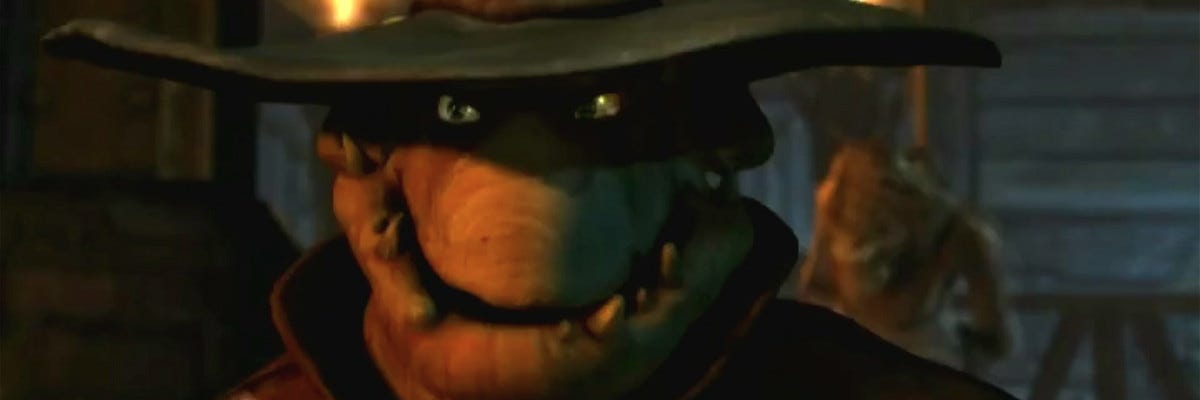
As of late, I’ve noticed that major gaming outlets tend to give out 10s in what feels like a gratuitous manner. For instance, IGN’s review of Onimusha: Way of the Sword culminated in a 10, but the tone of the review lacked any indication that we were dealing with a generational masterpiece here.
Even if I don’t hand out scores myself, I do think that, if you do use them, you should do so properly.
In discussing this topic multiple times with Lawrence 'Scanlines' Lichfield, we reached the same conclusion: extraordinary scores require extraordinary argumentation.
To put our money where our mouth is, we have selected a combined 10 games (5 each) that we feel deserve a perfect 10/10.
Many thanks to Lawrence for co-writing this article and do not forget to subscribe to Scanlines’ Journal!
What does a 10/10 represent?

Before we open our tome of masterpieces on this 10th day of the 10th month, we’ll each explain what, in our mind, makes a game deserve a 10 out of 10.
Lawrence
As a fellow non-score giver (a very technical term I know) I like to think of 10/10 games in two ways: firstly, there are literally my ten favourite games ever, the top 3 being Metal Gear Solid 3, Ocarina Of Time and Resident Evil on the GameCube. From a reviewer and retro enthusiast’s perspective, I think of 10/10’s as games that fully reached their potential, provide experiences that you can’t get anywhere else or pushed the medium forward; perfection has little to do with it. You cannot have a perfect game because nothing fits every mood or taste.
This way of seeing the 10/10 game also explains why so many of them came out between 1995-2005, I don’t think many would argue that this decade saw the greatest leaps in gaming technology as well as its maturation as an artistic medium. Video games in 1995 were only just creeping out of the sphere of children’s amusements and simple pastimes in the eyes of the public, but by 2005 we had realistic graphics and feature films based off video game IPs. It had gone mainstream.
I’m getting off-topic: a 10/10 should change the genre, it should be a game that you think about long after you put down the controller or shut down the PC, it should be fun and exciting and resonant, like a splash of cold water to a tired face.
Degonyte
Since Lawrence already brought it up, I don’t think it’s controversial to say that a 10/10 does not have to represent perfection. Perfection does not really exist as such, and I didn’t want to submit a list of 0 games as some sort of meta prank to our readers.
To me, a 10/10 can come in multiple forms. Some are games that employ and expand upon existing concepts, but in their execution set the bar so unfathomably high that it takes other developers years to catch up. Other releases come at a genre from such a unique angle that it completely reprograms my brain and redefines what I expect from other games that fall into that same category. A golden standard of sorts. Then there are games that subvert my notion of what the medium can achieve, and in doing so leave a deep and lasting impression on me. For my entries, I will try to use my limited space to make the case that all of the games I mention fall into at least one of these categories.
So, to summarize: to me, a 10/10 is to be awarded to those games that appear but a few times per generation and register outside of my normal realm of expectations in the most positive manner.
With that out of the way, let’s get to the hallowed games that fit our criteria.
Call Of Duty: World At War (by Lawrence)
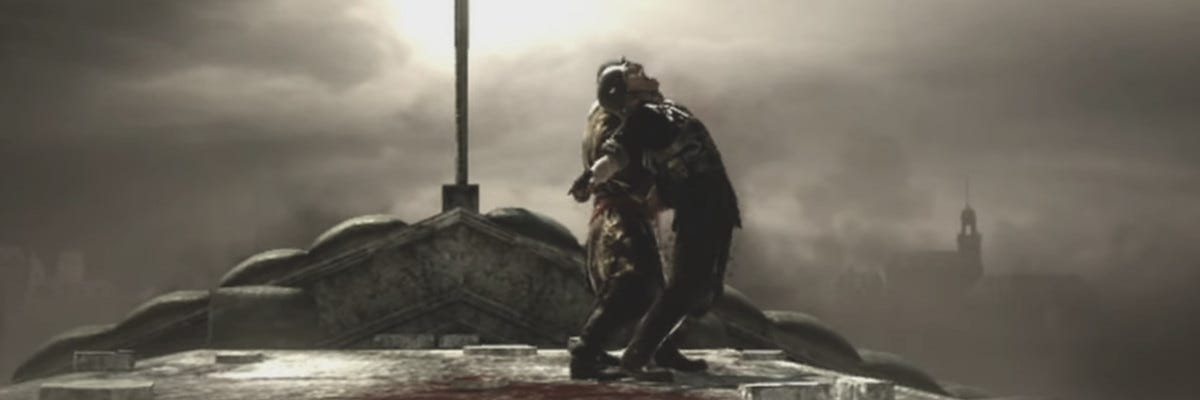
The Call Of Duty franchise has undergone quite the metamorphosis in its 23 year history. What started as a cash-in on Medal Of Honor’s [sic] kickstarting of the WW2 shooter craze turned into the slickest shooter series on the market with buttery smooth 60FPS gameplay on consoles before framerates were commonly discussed. Call Of Duty has gradually become a bloated corpse of regurgitated, pre-digested ideas but in the late-2000s it was groundbreaking.
Enter World At War: my second favourite Call Of Duty and the most narratively advanced the series has ever been.
2008’s World At War was the natural and poignant end to the WW2 shooter craze. Where Medal Of Honor had spurred on the player with patriotic brass and the promise that you were fighting for all things good in the world, World At War was essentially a horror game that didn’t shy away from depicting war for the nightmare that it is. Legendary British actor Gary Oldman’s perfect casting as Soviet soldier Viktor Reznov and a carousel of war crimes, real footage of combat and barbaric killings exacted on the enemy across 2 fronts repaint the war as a vengeful settling of grudges for the Soviet army and as a blood-soaked trip through hell and back for the Americans in the Pacific. World At War is a 10/10 because it dared to say something different in a genre known for unbridled jingoism and it manages to make you feel unclean without actively guilt-tripping the player.
Diddy Kong Racing (by Degonyte)
With the mascot racer being such a derivative subgenre in gaming, it doesn’t happen often that a game that falls into this category is both innovative and extremely well executed. Yet both of these qualifications apply to Diddy Kong Racing, a 1997 ‘Mario Kart clone’—an insulting moniker considering Diddy Kong Racing was the outright better game than Mario Kart 64, and I don’t even think it’s up for debate.
These days, Diddy Kong Racing is mostly remembered for featuring planes and hovercraft in addition to cars, as well as pioneering a single player adventure mode. More interestingly, the game was the first to feature many conveniences that we’ve since come to take for granted in modern karting games, including individual track selection, unlockable characters and a battle mode featuring bots. Diddy Kong Racing was also much more skill-based than its competitors. For one, the driving/steering itself had a high skill ceiling, and being able to exploit the cornering technique to its fullest gave you a massive advantage. Items also weren’t randomized, so no blue shells or lightning strikes to upend a perfect race.
Diddy Kong Racing was far ahead of its time as well as its competitors. It played much better than its contemporary rivals—Mario Kart 64 and Crash Team Racing—and it wouldn’t be until Mario Kart Wii, released a whopping 11 years later, that Nintendo’s main mascot karting series finally offered a palette of options similar to Rare’s 1997 effort. Theirs was a visionary game that I would award a nice, big 10.
Resident Evil (1996) (by Lawrence)
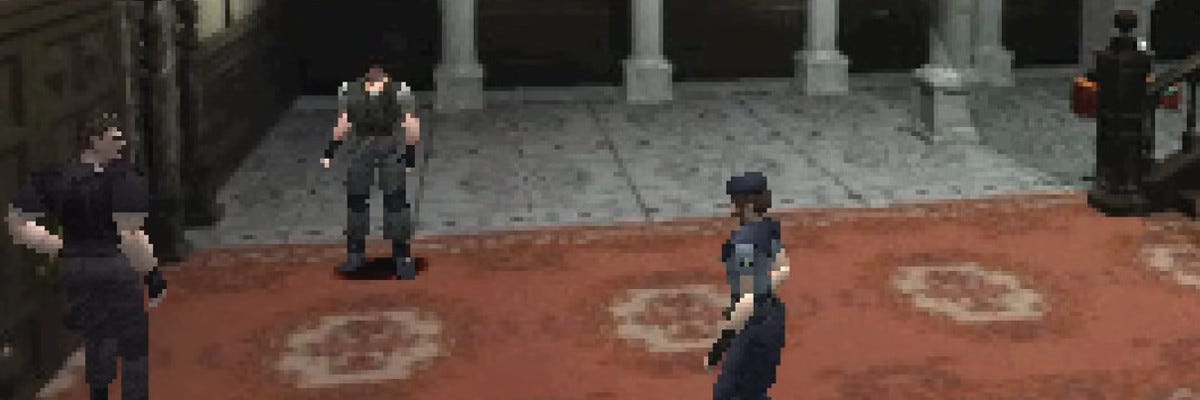
The original Resident Evil for PlayStation 1 and Sega Saturn was groundbreaking in its day and is remembered well by those who grew up with it but among later generations this game is a bit of a punchline; the profane voice acting, modern gamers’ unfamiliarity with tank controls and the dated visuals make this first outing easy to laugh at. The fact that RE1’s remake is the most perfect survival-horror ever crafted doesn’t help things either.
But I’ve been on a bit of a mission as of late to rehabilitate this game’s image and to espouse the original Resident Evil’s unique virtues. Look past the very obvious flaws and you still have an all-time great here, essential for newer fans of the series.
Where the remake’s atmosphere is stifling, gothic and decaying, the original is cold, sterile and liminal. RE ‘96 is disquieting and isolated, its fear derived just as much from the player’s imagination as it is the real danger of the undead. The remake censors the Hunters’ beheading execution while the original game has the player’s severed neck erupt in a shower of blood; the soundtrack is off-putting and sinister rather than macabre and haunted. I could go on and on… but you should go and play RE ‘96 for yourself. Resident Evil is a 10/10 because it spawned a great gaming empire, birthed a genre from the primordial soup of games like Sweet Home and it’s still great fun today.
Life is Strange: Before the Storm (by Degonyte)
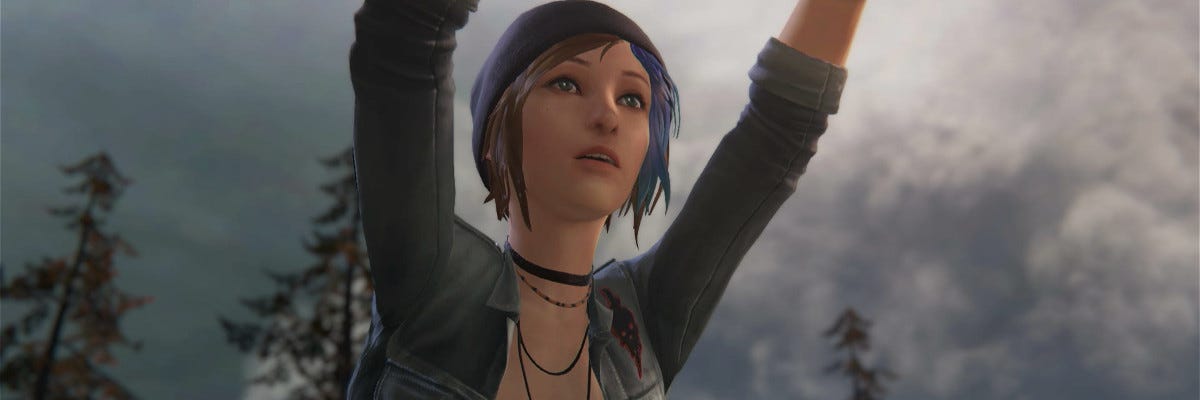
As a narrative adventure series, Life is Strange games always rely on the generosity of the player. Some of the controversy surrounding Mixtape’s release earlier this year was a stark reminder that, to a part of the gaming audience, the very notion of games being so light on actual ‘gameplay’ remains unacceptable.
What makes Before the Storm even more difficult to pitch in an article such as this is it being a prequel to the original Life is Strange, which was clearly intended as a one-off. So when Square Enix assigned a different studio to hastily produce a prequel, they must have done so because the original game’s success had painted dollar signs in their eyes. And yet, the one hill I will die on is that Before the Storm surpasses the original in most ways that matter.
This game’s iteration of Chloe Price—the deuteragonist of the original game—contains the best depiction of a complex grieving process that I’ve ever seen in media. Across Before the Storm’s four in-game days, we see Chloe transform from a moody teenager lost in sorrow into a brave young adult ready to face the future. At the game’s conclusion, she has not solved all the problems in her life, but she has emerged from her crisis wiser than most of the adults in her life. Laden with literary symbolism that continues to be rare in this medium, Before the Storm gives us a lifelike account of the effects of trauma on a young person’s life, while also standing as a reminder that it’s possible to overcome this burden.
Nights Into Dreams (by Lawrence)

I’m willing to bet most people reading haven’t heard of Nights before and I suspect even less have played it which is a real shame. Sega’s score attack-racing-flying-3D platformer hybrid is like no other game I’ve ever played. Don’t just take my word for it when I say that Nights is unique and novel; even Shigeru Miyamoto once stated he wished he’d come up with this game. Nights Into Dreams is a love it or hate it experience with some age-related faults but don’t let perfection get in the way of a 10/10 retro experience.
The development of Nights Into Dreams involved a lot of reading Freud and Jung; this is a game all about dreams and confronting the darkness within yourself, and the way these themes are conveyed within the confines of looping levels with strict time limits is extraordinarily impressive.
Nights Into Dreams is unfortunately hard to get a hold of today: the remastered version was never released physically and has been de-listed everywhere since, effectively erasing it from existence. Emulators, a real Sega Saturn or a Japanese PlayStation 2 port are your only options now. If you can get to grips with the unique flying controls and one of a kind game structure then what you’ll find is a narratively layered and beautifully scored video game. Nights Into Dreams is a 10/10 because on top of the fast and frenetic fun, it’s wonderfully charming and a beautiful time capsule back to that early 3D era where everyone was exploring the technology and working to redefine what video games could be.
Kirby and the Forgotten Land (by Degonyte)
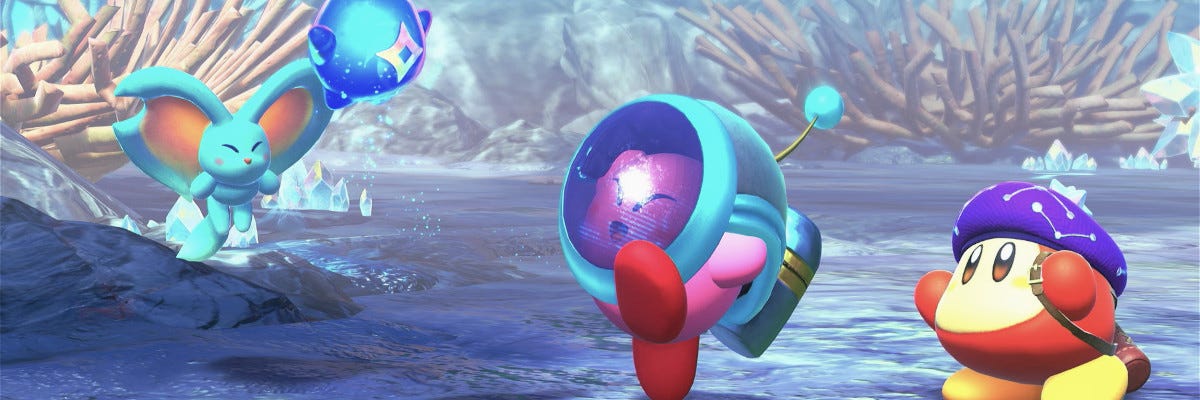
One of my more ‘out there’ opinions relating to video games is that Kirby is currently the best platforming IP exclusive to a Nintendo console. Yes, there’s Mario’s consistent quality, but something about that series’ almost sterile perfection often leaves me wanting more.
Kirby, meanwhile, likewise delivers a creative, bug-free experience while also retaining the sort of childlike whimsy that you normally only encounter in indie games. Given how prolific HAL Laboratory have been with delivering quality Kirby titles, it’s incredible that 2022’s Forgotten Land was the first full 3D game in the series. I once saw someone say that at least 80% of parents don’t love their children as much as HAL Laboratory loves Kirby, and in this light it makes sense that they didn’t release their mascot into the third dimension until he was absolutely ready to deliver the best experience possible. And boy, did he ever.
Forgotten Land offers a perfect balance between authored levels and light exploration. Between accessibility and mechanical depth. Between a light-hearted platforming hero’s journey and compelling world-building. What makes Kirby stand out as a 3D platforming hero is the same thing that made him work in two dimensions: platforming is all about the joy of navigating through a virtual space, and there is no character that’s as versatile and as fun to control as Kirby. Forgotten Land may not redefine what a 3D platformer can do, but its player-friendly design, unending creativity and overall quality have left me unable to find another game in its genre that matches it.
Space Engine (by Lawrence)

Those who read my reviews and lists will know that the cosy/relaxing genre of games really isn’t my thing: something about the childish visuals and slow music feels a bit off-putting and fake to me, like a counselor with a plastic smile, but Space Engine is different. This game -if you can call it that- was designed by one man: a Russian astronomer and former employee of the Pulkovo Observatory named Vladimir Romanyuk. It is a tool or virtual planetarium rather than a traditional video game but Space Engine holds the dubious distinction of being the only game that has ever put me to sleep.
Space Engine is a realistic, simulated universe you get to look about, all set to calming music and devoid of any player friction. You simply explore. The reward is a great view and the peace of a silent cosmos. Space enthusiasts and science types will get a kick out of seeing how it all works and observing simulated stars and fast orbits while simpletons like me will gawk at the universe and slowly doze off.
If you own a headset then Space Engine can also be played in VR and it is a surreal experience floating around space like some kind of cosmic deity. Some people may object to me putting Space Engine on a 10/10 games list but if Mixtape counts then so does this and, unlike that game, this is a genuine indie product, not a nepotism-financed, sickly nostalgia pudding. Space Engine is a 10/10 because it cleanses the mind and soul with an appeal unlike anything else out there.
F.E.A.R. (by Degonyte)

With first-person shooters as a genre being so rife with trend-chasing, imitation and stagnation, it’s a miracle that the 2005 release FEAR has remained somewhat of a one-off in terms of the gameplay experience it offered. In some ways, it was a traditional FPS that still favored health pick-ups over regenerating health—an increasingly unpopular design choice at the time—and featured the semi-linear yet open combat arena design of the very first games in the genre. On the other hand, its highly advanced combat AI and responsive environments made the gunfights in FEAR unlike anything that came before. Or after.
As happens with every successful game, FEAR was immediately turned into a franchise, but neither of its sequels replicated the sheer thrill of the original, with especially FEAR 3 being an unambitious CoD clone that locked its best gameplay mechanic behind either co-op or post-game. More recently, there have been indie projects inspired by FEAR, but out of those, only Selaco seems to understand that what made FEAR’s combat good wasn’t just the ‘intelligent’ enemy combatants, but also pacing and arena design that accommodated the AI while obscuring its weaknesses.
FEAR changed my expectations of what combat could feel like in a single-player FPS campaign, and a lot of games I’ve played since have felt just that little bit less exciting as a result. FEAR may not be perfect, what with its tacked-on horror gimmick and often bland-looking levels, but its shaking the status quo of a genre that still hasn’t fully caught up 20 years later makes it stand out to me as an all-time masterpiece that merits a 10 out of 10.
Barotrauma (by Lawrence)
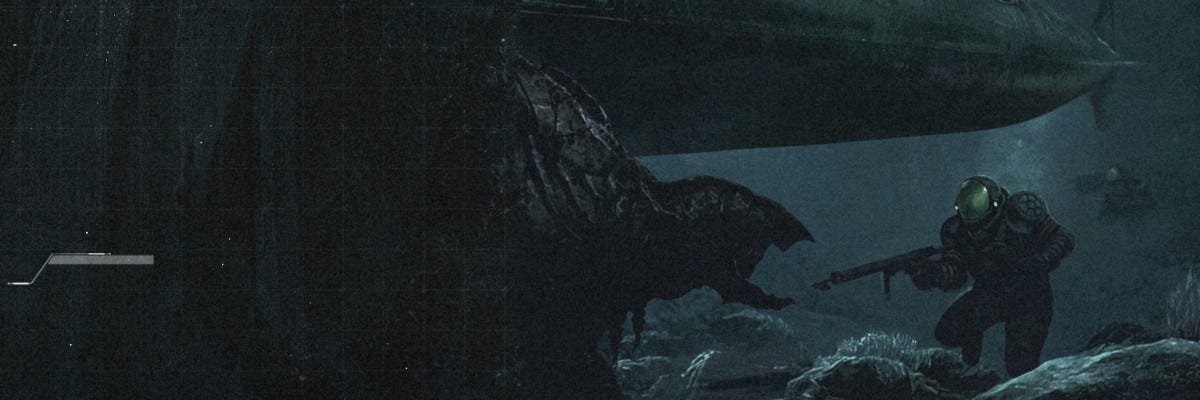
Horror is the shock and flight or fight response from witnessing something chilling whereas terror is the gradual, stomach-churning build-up to the big reveal; Barotrauma masters both horror and terror to deliver a management sim/exploration hybrid that you won’t soon forget. Whether alone or with a friend, you and a crew of other unfortunate souls will navigate a submarine into the depths of Europa, fighting off herculean beasts in the depths, exotic, alien viruses and contending with the various oddball factions that have flourished in the ice cold waters so far from Earth.
While this one is arguably best experienced with friends, you get the full claustrophobic hit of horror playing Barotrauma alone… and the AI crew are better at following orders. You’ll spend your time managing personnel in an effort to keep your -likely doomed- vessel running, taking on contracts and embarking on missions that can quickly turn deadly; I’ve played this with other people before and it’s not uncommon to see your mates get snatched by a creature and dragged off into the dark while mining outside, never to be seen again.
Barotrauma is a 10/10 because its horror is not diminished by the introduction of multiplayer, the setting is extraordinarily oppressive, even the simplest journey feels rewarding to live through and your decisions have real consequences. Most management games are afraid of putting you into a no-win scenario while Barotrauma relishes it. In the seas of Europa, you can only do your best.
Oddworld: Stranger’s Wrath (by Degonyte)
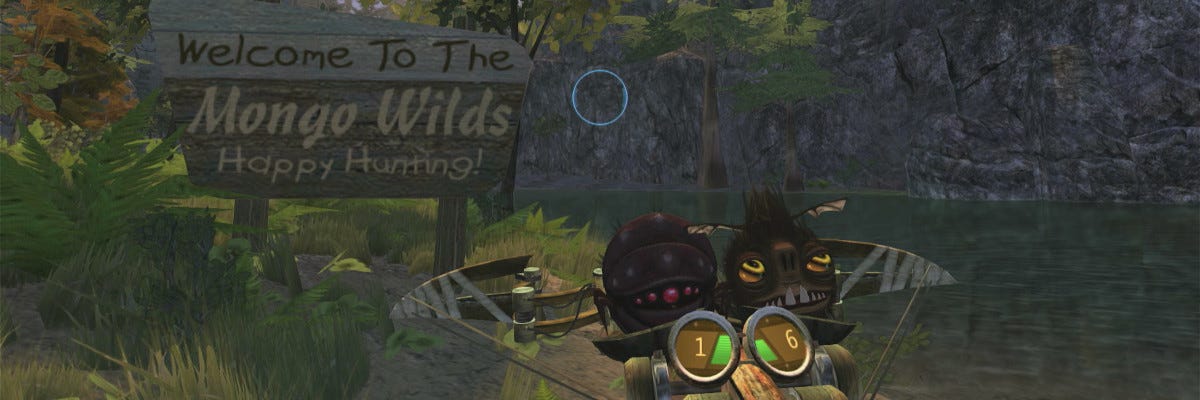
In danger of spoiling a topic for a future article, both Lawrence and I feel that the original Xbox’s library is vastly underappreciated within retro spaces. This is the simple consequence of the bulk of retro-focused content creators coming from Nintendo, Sony or Sega backgrounds. I was mainly a Nintendo kid myself and therefore share in this guilt, but I did come to own an Xbox as well, and still really appreciate what it did for gaming in spite of any feelings about Microsoft then or now. If I had to pick one Xbox exclusive, though, I would point to Oddworld: Stranger’s Wrath as a shining example of that library’s depth.
Stranger’s Wrath was marketed as a hybrid between a first-person shooter and third-person platformer, but remains hard to compare to anything in either genre. It’s set in an Oddworld-tinged rendition of the Wild West, with the eponymous protagonist, a bounty hunter simply called Stranger acting as its Clint Eastwoodesque antihero. You spend most of the game bagging bad guys, which come in the form of regular henchmen and much more dangerous gang leaders. These gang leaders are to be taken down in increasingly intense boss fights that form the climax of each mission. They can be captured dead or alive, with the latter of course allowing you to claim a bigger bounty. This makes for a tight gameplay loop centered around risk vs. reward, and whose structure is largely predictable, but also constantly makes you wonder what type of scenario you’ll be facing next. In this sense, Stranger’s Wrath might be more similar to something like Dishonored than any game that better overlaps with either of its genres.
I could go on for ages about Stranger’s Wrath—and I probably will on another occasion—but for now I’ll conclude by saying that this game deserves a 10/10 because it came out of nowhere to deliver a unique, immensely addicting experience that has never really been replicated. It incentivizes you to strategize and experiment like few other shooters do to this very day. Along the way, Stranger’s Wrath even manages to tell a captivating story on the importance of accepting who you are, while also dipping its toes in a thematic undercurrent of ecology and Native American spirituality. Fortunately, there is an HD remake available on most platforms which, while a bit rough around the edges, allows you to experience what might well have been 2005’s best game, as well as one of the most unique releases in the medium at large.
That’s our end of the bargain complete! A whopping 10 games that we feel deserve a 10/10.
Please let us know what you think constitutes a perfect 10, and do include some examples of games that you feel meet those standards.
Notes
All images taken by Degonyte and Lawrence unless otherwise indicated. All images edited by Degonyte.
Ah, Diddy Kong Racing. There's a callback! Rare was the gold standard, especially Banjo-Kazooie. I still try to play those games, even though the tech is too rough.
One good definition of 10/10: I wish I could discover the game again for the first time.
I LOVED THE FIRST FEAR. Nice to see I wasn’t alone. And I’m downloading Barotrauma now - I’ve been looking for something scary