
A Doomed Genre
How FPS design keeps collapsing in on itself

So what started as a simple discussion of the recent FPS title Mouse: PI For Hire inadvertently turned into a recounting of the history of the entire first-person shooter genre. While this history is not exhaustive and in parts ham-fisted (I like Call of Duty more than I let on, and I barely even mention Halo), I do think there’s value in the bird’s eye view it gives of the entire genre, and why I was ultimately let down by Mouse PI. Sadly, I did not get to talk about that game as much as I wanted to, so I will still write a proper review of it at one point. This article might also come in handy for me as a reference point when I discuss FPS titles going forward. That is why I’ve decided to preserve the more tangential route that the article ended up taking. No, I don’t know how this keeps happening either. Read and tear!
The CoD delusion

I still remember the first time I became a snob.
By the second half of the 2000s, Call of Duty had completely taken over the video game industry. The war-themed first-person shooter series had redefined what people expected from that genre, and its resultant omnipresence thence reshaped the medium of video games as a whole.
With its short and linear campaigns, an ever-increasing focus on multiplayer, and a penchant for cinematic realism, entries like the first two Modern Warfare titles (from 2007 and 2009) helped underline what gaming was now: a medium that had broken out of its niche and was, by most metrics, outpacing cinema in profitability.
Call of Duty was at the vanguard of this tectonic shift in the entertainment industry: it was shiny, grand and audiovisually impressive.
The only issue was... I hated what it was doing to FPS games. I did try many Call of Duty titles and even enjoyed some of them, but in the end I saw them as shallow and generic manifestations of a genre I once loved. Most of all, it frustrated me to see how audience and press alike stood in awe at the illusion of a cinematic experience with each new installment.
I had become a snob.
Even though being a contrarian and disliking the popular thing is a phase that many young people go through, there was genuine frustration behind my teenage facade.
To help you understand that, I’ll need to clarify my own history with the genre.
The rise of the Doom clone
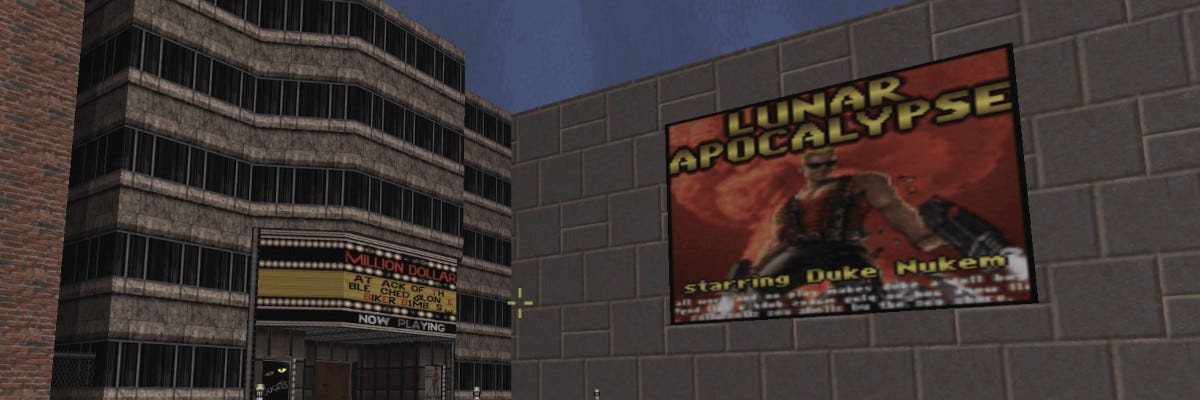
First-person shooters had been among my favorite games ever since my dad and older brother introduced me to classics such as Wolfenstein 3D, Doom and Duke Nukem 3D.
Initially known simply as Doom clones due to the dominant influence of that iconic game, first-person shooters grew into a proper genre across the second half of the 1990s, going from faux-3D to full polygonal glory with Quake, proving their worth on consoles through Goldeneye, and displaying hitherto unseen storytelling prowess with Half-Life.
In a sense, the genre grew with the technology that hosted it, so when true 3D graphics1 became the standard, so grew the cinematic storytelling ambitions of game developers.
Stories that had previously been relegated to game manuals or sparing on-screen text were increasingly being acted out as you were playing the game, either in cutscenes or during actual gameplay.
First-person shooters certainly weren’t alone in riding this industry-wide trend, but with series like Halo and Medal of Honor, we can find quite a few shooters among its most iconic examples.
It was Call of Duty in particular that took this cinematic approach—made possible by the ever-advancing technology—to extreme heights, seeking to mimic that larger-than-life blockbuster feel which also defined many Hollywood productions at the time.
It was in pursuit of this filmic bombast that Call of Duty brought the cinematic approach to its logical conclusion, resulting in obnoxiously linear and restrictive levels with accessible, simplistic gameplay. Player freedom had the annoying habit of not meshing too well with scripted set pieces, leading the developers to restrict the former, treating such creativity as a problem in need of a workaround.
So while first-person shooters now looked more realistic and more spectacular than ever before, something was also lost along the way.
Back in the ‘90s, first-person shooter level design was something of an art form. The different stages in games such as Doom, Heretic and Blood were defined by a degree of non-linearity and modest amounts of backtracking.
As the player, you were typically tasked with finding keys—or some stylized equivalent more befitting of the game’s particular theme—to unlock different parts of each level. This meant that, in addition to blasting all the enemies in your way, you were expected to do some exploration, navigating to and through different parts of the map as the size of this ‘playground’ grew alongside your progress.
It was also a staple for levels to include many alternate paths, hidden rooms and secret exits that stimulated the player’s resourcefulness and observational skills.
Often, such level design reached a point where it could be described as labyrinthine, testing not only the player’s combat skills and resource management, but also their ability to mentally map their surroundings and keep track of their own progression in a fashion that could almost be described as Metroidvania Lite.
In these classic ‘90s shooters, you conquered the enemies as much as you did the levels containing them.
As first-person shooters adopted a more cinematic sense of progression, such level design became less compatible with the storytelling vision of developers. They instead favored to send the player from point to point along a narrow and pre-determined path, making sure they were strapped in for the Hollywoodesque spectacle that had been crafted for them, no expenses spared.
By the early 2010s, this was simply how most FPS games were made. The genre had become CoDified.
Some franchises even sacrificed their entire identity in pursuit of aping Call of Duty, hoping to emulate not just its style but also its obscene revenue streams. Many such attempts proved fruitless: in a previous article, I already described how FEAR 3 spelled the end of that series by adhering to the make it more like Call of Duty approach to FPS design.
Complaints about the restrictive nature of such games were also present back in those days, and it’s no coincidence that, along with the rise of the cinematic shooter, we also witnessed the advent of open world shooters.
FPS games such as Crysis and STALKER: Shadow of Chernobyl (both from 2007) gave the player more freedom to express themselves than the genre had ever done before, but they were still a far cry from the puzzlebox design of the ‘90s classics. By and large, the latter design formula was seen as an archaic relic born from technological restrictions rather than possessing any inherent value.
Still, it was at the height of the popularity of Call of Duty in the early 2010s that we saw the rising promise of a new type of game. Or rather an old one.
“Boomer shooters”
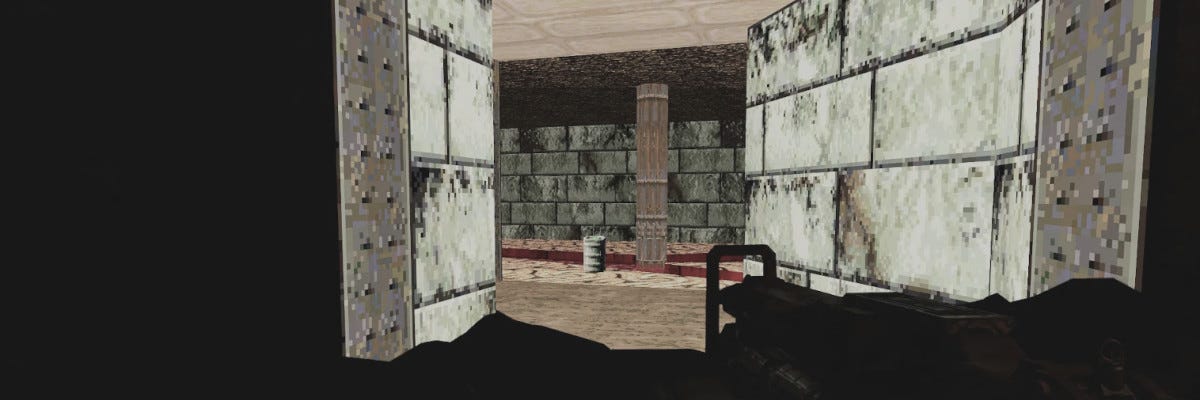
Aware of the frustrations that some more hardcore fans of the genre started to air with the linearity and realism of the modern FPS, a handful of developers started to experiment with a more retro approach to design. This often came with the hopeful promise of the resulting game being ‘a throwback to the good old days.’
Games like Hard Reset (2011) and the 2013 Rise of the Triad remake pivoted, each in their own way, away from the dominant design philosophy of the age. The former did so by taking inspiration from ‘90s titles such as Quake, and the latter by simply creating a modern rendition of an actual ‘90s shooter.
Neither Hard Reset nor RoTT 2013 made by themselves much of a ripple in the water; rather than milestones, they were stepping stones towards the gradual resurgence of the old-school FPS.
Then, Doom was released in 2016. As alluded to by its bare-bones title, Doom constituted a reboot of the series.
Rather than trying to ride the trends of its day, the game was heavily inspired by the first two Doom games. Once again, the emphasis was on killing tons of enemies, with many of the levels being open-ended and fit for exploration as you searched for door keys to progress. Health was not replenished automatically like in most modern FPS games, but by health pick-ups that were laid out in the world or could drop from slain enemies.
Doom 2016 wasn’t a full throwback, though. It featured plenty of modern design elements, such as an emphasis on verticality and the addition of glory kills. The game nonetheless primed a modern audience for design that hinged on classic ideas, even if many players would not have fully realized this.
With its ‘modern retro’ design, Doom 2016 re-established the franchise at the forefront of AAA gaming. This was the spark that indie developers needed to extrapolate on the notion that classic design could still work in modern times, both commercially and creatively.
David Szymanski’s 20182 indie title Dusk then delivered one of the first throwback shooters that accurately captured the spirit of the ‘90s. The game featured graphics, gameplay and design that could have believably passed it off as a lost FPS from that era. So remarkable was this total dedication to the semi-open design of old that a new term was born to describe this archaic style: boomer shooter.
A hype train created in Build
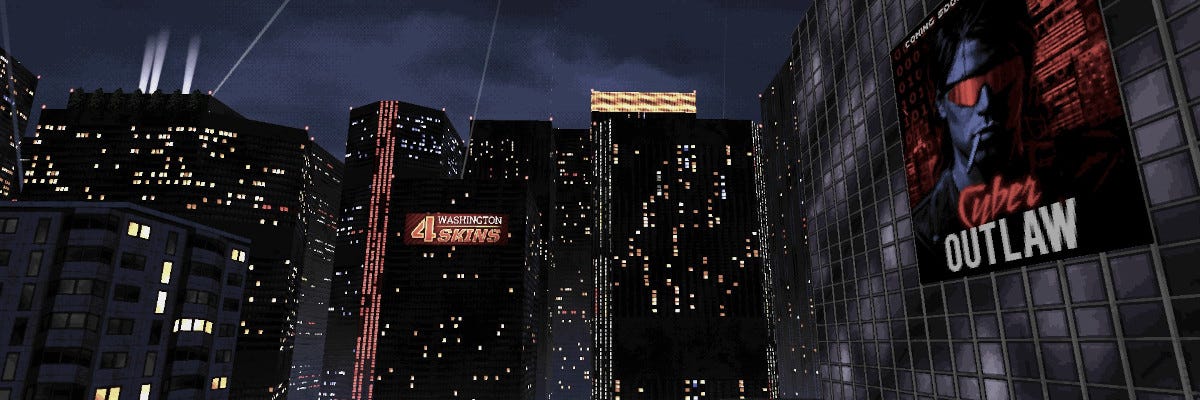
With Doom having re-established itself as an FPS institution and Dusk rapidly becoming something of an underground hit, it had become undeniable that there was a market for people who craved a return to the classic design tropes. Complex levels, fast movement, an inhumanly huge arsenal, and no regenerating health: the old had become the new.
Further spurring the momentum of this emerging boomer shooter trend were two other important games.
Developed by indie studio Indefatigable, Amid Evil was released episodically along 2018 and 2019. It featured both aesthetics and gameplay that revealed its main inspirations to be Heretic and Hexen, two other short-lived yet recognizable IPs from the mid-‘90s.
Also in 2019 we saw the release of Ion Fury, which can best be described as a spiritual successor to Duke Nukem 3D, mirroring that game’s cartoon realism,3 talkative protagonist and abundance of pop culture references.
Something that ties all of the aforementioned games together is that they were created by people who possessed a deep understanding of the design legacy of first-person shooters—they had accrued many years of experience building levels adhering to the classic design philosophy that their modern reinterpretations then built upon.
Since this information is pertinent to our understanding of the nascent boomer shooter craze, we’ll need to dig a little deeper here.
Amid Evil was made by two friends with a history in creating custom maps dating back to the ‘90s, and the pair had also worked on the Rise of the Triad reboot mentioned earlier.4
Ion Fury, meanwhile, was created using EDuke32—a source port of the original Build engine. Build had formed the technological backbone of Duke Nukem 3D and a handful of other iconic shooters from the era. In fact, Richard “TerminX” Gobeille, director of Ion Fury and CEO of its developer Voidpoint, was also the creator of EDuke32 and is known as one of the most influential figures in the Duke Nukem community. Needless to say, his familiarity with classic FPS design would have become second nature well before development on Ion Fury commenced.
Even Dusk, which was made by sole developer David Szymanski, shows clear inspiration from Quake, Doom and the more recent STALKER. Contrary to the people from the previous examples, Szymanski’s interest appears to lie in horror more than first-person shooters specifically. Still, the accurate retro design of Dusk, as well as some of his other games like Butcher’s Creek and Iron Lung, display the creator’s undeniable knowledge and versatility when it comes to video game development.
The point here is that these games arrived at the tail-end of a learning process that consisted of years, even decades, of immersion in first-person shooters and creation within their associated community spaces. The result of this process was a high degree of design literacy—an awareness of the genre’s history and what had made those old games work, as well as the creative instinct to exploit modern technology and meaningfully expand upon that old formula without betraying its principles.
Unintentionally, these games together also covered a lot of ground, invoking memories of Doom, Quake, Heretic and the Build classics, granting anyone who played all three modern reinterpretations a comprehensive overview of old-school FPS design.
In the early days of this retro renaissance, the term “boomer shooter,” while itself a tongue-in-cheek jab at archaic design, specifically referred to these games—ones that rejected nearly all modern genre innovations and adhered to this non-linear, old-school design philosophy.
It did not take long for the waters to become muddied.
Dilution

Even though their sales performance would’ve been nowhere near AAA territory, and they could at best be described as moderately successful indie titles, the triumvirate of Dusk, Ion Fury and Amid Evil built some tangible cultural momentum.
It was during this period—the late 2010s—that we saw the rise of content creators who covered this new underground trend in FPS design, with most notably YouTuber Civvie11 becoming a curator and cultural guide of both these new boomshoots and their spiritual forebears.
With this growing relevance also came more developers, frequently emerging from the Doom modding scene, who felt emboldened enough to launch their own commercial products.
Examples of high-quality boomer shooters include the ambitious Supplice, which had started as a TC (Total Conversion5) for Doom and since grew into a standalone game that is currently in Early Access. Or the brilliant Cultic, an intricately designed old-school FPS whose second chapter was released in the fall of 2025.
These are but two examples of the many games that made it to commercial release after Dusk and its fellow pioneers had paved the way, loyal to those same design principles of the oft-invoked ‘90s classics.
Curiously, as the number of boomer shooters grew, so did the array of different games that this term came to be applied to. While boomer shooters originally referred specifically to the modern reinterpretations of classic design, the term quickly grew to include those actual classics, as well.
Once this distinction between old and new had faded, the meaning of ‘boomer shooter’ continued to expand—or rather disintegrate—growing into a catch-all term to describe any FPS game that looked vaguely retro or simply differed from mainstream design conventions.
This is apparent from the way that games like Ultrakill, Turbokill and Mullet Mad Jack are often used as prime examples of boomer shooters—they are in some cases even referred to as such by their own developers—while none of them actually have much in common with the design philosophy for which the term was invented.
On its own, ‘boomer shooter’ becoming an umbrella term might not have seemed like a big deal, especially when the games it was being associated with happened to be great shooters in their own right.
Still, the loss of clear meaning was indicative of a more consequential trend, that being a worsening understanding of what ‘90s FPS games were actually like, and what made them good.
Okay, time to do some gatekeeping

In one of my first articles on this platform, I already covered Hellbound, just one of many examples of a game that claims ‘90s design heritage without actually understanding it. As it turns out, Hellbound was just the tip of the iceberg.
When you look at ‘boomer shooter’ communities today, for example the popular subreddit dedicated to these games, every other post is a new developer pitching their new ‘boomer shooter,’ which increasingly often boils down to an extremely generic, bare-bones FPS that does nothing new or interesting while also lacking those core elements that would put it in the design lineage of the original Doom and its clones.
Though this may seem harsh on those developers—I don’t fault them for using their creativity and having the actual courage to put something out there—it is the inevitable result of a process of cultural dilution.
In the case of boomer shooters, it works as follows:
The initial wave of boomer shooters is created by developers with long track records in classic game development, and who therefore possess a deep understanding of the design history of first-person shooters. As such, they know which design elements to extract from the classic games to generate a retro feel that blends well with modern playability without hurting authenticity. Of equal importance is them knowing what not to include.
Initially, this new trend spawns other creators who are cut from the same cloth, emerging from various modding scenes and possessing that same knowledge which allows them to develop ambitious new spins on classic FPS design.
As the trend continues to grow, it also begins to attract developers who may not necessarily have played the ‘90s games that the boomer shooters were based on, but who really enjoy these modern re-interpretations and want to expand upon them. Thus, their frame of reference is already smaller and their work becomes a distillation of classic design.
New games hit the scene that in some cases retain the quality, but not the spirit of the boomer shooters that paved the way for them. This then generates a snowball effect, where an increasingly broader array of FPS games is tagged ‘boomer shooter’, confusing both audiences and subsequent developers on what the term actually means, resulting in subsequent ‘boomer shooters’ straying even further away from the original premise.
As a result of the gamedev telephone game described above, the term ‘boomer shooter’ is rendered meaningless beyond describing any FPS that even vaguely looks retro.
This process might still not seem like much of a problem as long as it continues to generate good games, but the true problem is that this cultural mimesis nearly always leads to staleness and a loss of creativity. You can easily see this by looking at analogous occurrences in other parts of popular culture.
Take metal music, for instance.
Initially, metal was a singular form of music that, across the 1980s, branched off into different subgenres. The pioneers of these subgenres still possessed a wide range of musical influences. For instance, the trailblazers of American thrash metal were influenced by pop and rock music from the ‘60s and ‘70s, which can clearly be heard in the surprising melodic variety that emerges from this otherwise loud and aggressive form of music. Subsequent generations of thrash metal bands then became increasingly influenced by the thrashers that had come before them, leading to creative stagnation as the reference pool for subsequent artists became more narrow, and the knowledge of what thrash metal was and where it had come from faded from public consciousness.
The increasing staleness of recent boomer shooter releases is a product of this same incestuous dynamic, its deterioration sped up by the presence of the internet and the increased accessibility of basic game design tools.
A return to snobbery

The thing that actually prompted me to write this lengthy exploration of the FPS genre was the recent release of Mouse: PI For Hire.
While that game is widely being referred to as a boomer shooter,6 it has in fact drifted closer to the same design choices that throwback games such as Dusk and Ion Fury tried to escape from.
Bouts of extreme linearity, invisible walls that would make Call of Duty blush, a stamina bar, closed off arena-based encounters—if it weren’t for its rubberhose cartoon presentation, this would simply be seen as a modern shooter.
Naturally, though, the question of which subgenre a game belongs to has no inherent bearing on its quality.
After all, one of my favorite all-time FPS games is Selaco, whose creators have since the beginning rejected the boomer shooter label, as they rightfully pointed out that the design was inspired by Half-Life, Doom 3 and FEAR, all titles that had already diverged from the original premise of first-person shooters.
Still, with ‘boomer shooters’ once being a specific term for games that filled a specific void left by modern gaming, its complete disintegration does strike me as somewhat of a tragedy.
To be sure, one cannot fault small-time developers for wanting to latch on to a trendy term to try and find an audience for their game. It has however been disappointing to see critics—who ought to act as curators—in large part go along with the dilution of the term, their liberal use of the boomer shooter tag quickly rendering it useless to describe a game with any degree of accuracy. In doing so, they also helped remove the label’s function as a safeguard against the trends of modern FPS design that some of us had grown so tired back when Call of Duty still reigned supreme.
So, I once again find myself in the same position as all those years ago. Frustrated at how audience and press alike stand in awe at the illusion of an authentic experience, as each new ‘boomer shooter’ continues to clutter the idea of what the original FPS games were actually like.
It is a comforting thought, then, that at the very least, snobbery does not dilute over time.
Notes:
Sources include those linked throughout the article. Wikipedia was consulted for basic data like release dates of the games mentioned, and for some extra information and sources on Amid Evil.
All screenshots taken by me, except for the Doom 2016 one, which was taken by my friend Premek.
The 3D effects in early FPS games were mostly illusionary in nature, with engines such as Build retroactively referred to as 2.5D. Hence ‘true 3D’ to emphasize the technological leap achieved by games such as Quake and Unreal.
Many indie titles follow an Early Access model and may also go through a period of closed or open betas ahead of release, making it a bit tricky to pin their exact release date. For the sake of clarity, in this article, the dates that I mention generally indicate the year in which the game left Early Access and was released into 1.0. Exceptions are marked as such.
In case it’s not obvious what I mean by this, Duke Nukem 3D and subsequent games made on the Build engine distinguished themselves from games like Doom because they featured more realistic (read: everyday) settings and locations, such as cinemas, malls and train stations. Meanwhile, Doom and Quake had more abstract, hellish environments. Of course, by the standards of today, Duke Nukem’s environments don’t look realistic in the sense that we might understand it, but rather as if ripped from a cartoon or animated movie. Hence the term ‘cartoon realism’ to distinguish it from the more gritty realism in games like Call of Duty.
As confirmed by this article.
A Total Conversion is, as the name implies, a mod of a game that completely alters the content to essentially make a new game. For clarity, the difference between a Doom Total Conversion and a game built on the GZDoom engine is that a TC is mostly built using existing assets from other games, whereas a standalone game cannot contain such ‘legacy content’ if the developer wants to sell the product commercially.
Much to its credit, on the official Steam store page, Mouse PI is only referred to as “boomer shooter-inspired,” although this didn’t prevent major publications like IGN from simply calling it a boomer shooter.
Very thoughtful post. I'm reminded of a quick scene in School of Rock. Jack Black is teaching his class about the history of rock music in a montage, which traces back through so many other music genres that all build on each other.
Which makes me think that you are correct, naming everything a boomer shooter is not really defining it well. They actually all come from a large history of previous games and genres (even a mixture of many), meaning describing them doesn't have to be so reductive. It should be possible to identify their roots better than FPS, Doom/Build clone or "modern".
Most of these new “boomer shooters” are just bad reskinned Doom wads with one or two brutal doom features. It’s also a gimmick genre because its fan base is relatively niche and relies heavily on YouTubers like Civie 11 or Gman for sales and clout. This leads to a lot of nostalgia baiting and “quirky chungus” type decisions by the devs. Everything is derivative in terms of aesthetic without really understanding game design. Boltgun is the perfect example. It’s Warhammer slop which throws you in a room enemies spawn then repeats that. Honestly, most new titles lack the creativity of the Doom or Blood modding scene. Death Wish and Eviternity 2 blow 90 percent of these slop games out of the water.
(Also I kinda hate the irony posting and millennial writing associated with the genre. I get it Shadow Warrior, Blood, and Duke were tongue in cheek parodies of 90s cinema, but does everything have to be like that.)